A year ago, global alarm over the emergence of an impulsive new damage of H1N1 pandemic flu was in full swing. Headlines blared that thousands were becoming sick; face masks and hand sanitizers were selling out as soon as they hit store shelves. Weird, where is H1N1 this spring?

Dr. Margaret Chan, head of the World Health Organization, said that the virus is still considered pandemic, meaning widespread, though case numbers have ebbed significantly.

In the meantime in the United States, the U.S. Centers for Disease Control and Prevention noted that, as of May 22, just 1 percent of outpatient visits concerned flu.
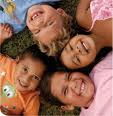
For kids, summertime can be understand as the time spent at the beach or lake, afternoon bike rides and playing badminton in backyards.

These days, summer is more likely to be lived in the not-so-great indoors, with kids glued to computer screens and televisions with little “human” contact.

The indoor child phenomenon concerns health experts and environmentalists, who worry about the effects on health, growth and relationships.

By the time most U.S. children enter kindergarten, they have spent more than 5,000 hours in front of a television, and that is enough time to earn a college degree, according to David Mizejewski, a naturalist with the National Wildlife Federation who uses those frightening statistics in the federation’s “Be Out There” campaign to get children back outside.

This innovative kind of incessant glucose monitor relies on fluorescent nanoparticle ink injected under the skin to detect blood sugar levels with a watch-sized or smaller monitor worn over the skin, according to the researchers at the Massachusetts Institute of Technology (MIT) who are developing the original technology.

The glucose “tattoo” ink would be made from carbon nanotubes that can reflect infrared light back through the skin to the monitor, and this new device has the possibility to free people with diabetes from having to do frequent finger pricks each day or to modify a continuous glucose monitor device each three to seven days to keep track of their blood sugar levels.

An experimental drug being developed by Curis Inc and Roche Holding AG showed promising effects in a small, early-stage trial linking children with medulloblastoma, the most ordinary kind of malignant brain tumor in children.

The drug, GDC-0449, is element of a hopeful new class of drugs that block the Hedgehog signaling pathway, which involves a number of proteins that play a position in cell development.

The Phase 1 trial results, obtainable here at a meeting of the American Society of Clinical Oncology, demonstrated that 12 of 13 children with regular or drug-resistant medulloblastoma have tolerated the drug well without important side results, with one patient remaining on the drug for more than a year without illness evolution.

Oil has now washed up on the beaches of three Gulf states.People should,certainly, stay away from oil on the beach or in the water, but swallowing a little oil-tainted water or getting slimed by a tar ball is not careful grounds for a trip to the emergency room, health officials say.

Doc Kokol, a spokesman for the Florida Department of Health mentioned that incomplete contact is not somewhat that needs to be treated by a physician. It’s been six weeks since the Deepwater Horizon rig exploded, killing 11 workers and pouring an estimated 21 million to 45 million gallons of crude oil into the Gulf of Mexico. Oil has hit beaches in Louisiana, Mississippi and Alabama. And it lurks off the shore of the Florida Panhandle.

Page 10 of 19« First...89101112...Last »